Friday, June 23, 2006

Or this space will represent the Lerner groups'
"backup" plan for all above-ground parking


From Jacqueline Dupree:

http://www.jdland.com/dc/
Lerners Still Want Aboveground Parking as Plan B
(6/22/06) The Post's Day 2 story on the stadium parking garages, "City Urged to Support 2 Proposals," says that team owner Ted Lerner "wants city officials to adopt his proposal for aboveground-only parking as a backup if the mayor's plan for parking aboveground and below falls through. [...] The Lerner group stressed that it will agree [to the city's plan for both underground and aboveground parking with surrounding development] but asks that the city consider the group's plan for aboveground parking with no other development as a Plan B." As for logistics: "The city's chief financial officer, Natwar M. Gandhi, is analyzing whether he can certify the money is available for the city's parking plan. D.C. Council member Sharon Ambrose (D-Ward 6) has scheduled a hearing on the stadium July 6. And the council will vote July 11 on a resolution to transfer development rights on the stadium site near South Capitol Street and the Navy Yard in Southeast Washington to private developers." In a classic chicken-and-egg scenario, CFO Gandhi wants a letter from Herb Miller's financial backers before he certifies the plan, but the backers want to see that the plan is supported by the Zoning Commission at the June 26 hearing before proceeding. The WashTimes story from today has similar comments, saying that approval of the plan by the Council is likely as long as Miller can show "how the project can be paid for without threatening the city's $611 million spending cap for the stadium." This story says that approval of the aboveground structures by the Zoning Commission is less certain.
Watch this June 26 meeting. The longer this decision is delayed, the greater the liklihood that the Lerner's will argue for this "plan B".

Thursday, June 22, 2006

Demolition for Stadium complete

PRESS RELEASE: June 22, 2006

F&L/Wrecking Corp Joint Venture (FL/WCA), which was awarded the demolition contract for the new DC Major League Ballpark to house the National League’s Washington Nationals, has neared completion of the complex project, including demolition of six city blocks in southeast DC and hazardous material removal. FL/WCA is an LSBDE partnership of Wrecking Corporation of America (WCA), which has helped pave the way for the future of the DC area through numerous high-profile demolition projects, and F & L Construction Inc., a Washington, DC-based construction and hauling contractor.

Alexandria, VA (PRWEB) June 22, 2006 -- F&L/Wrecking Corp Joint Venture (FL/WCA), which was awarded the demolition contract for the new DC Major League Ballpark to house the National League’s Washington Nationals, has neared completion of the complex project. FL/WCA is an LSBDE partnership of Wrecking Corporation of America (WCA), which has helped pave the way for the future of the DC area through numerous high-profile demolition projects, and F & L Construction Inc., a Washington, DC-based construction and hauling contractor. The general contractors for the project are Bethesda-based Clark Construction Group, Indianapolis-based Hunt Construction and the SR Smoot Corporation of DC.

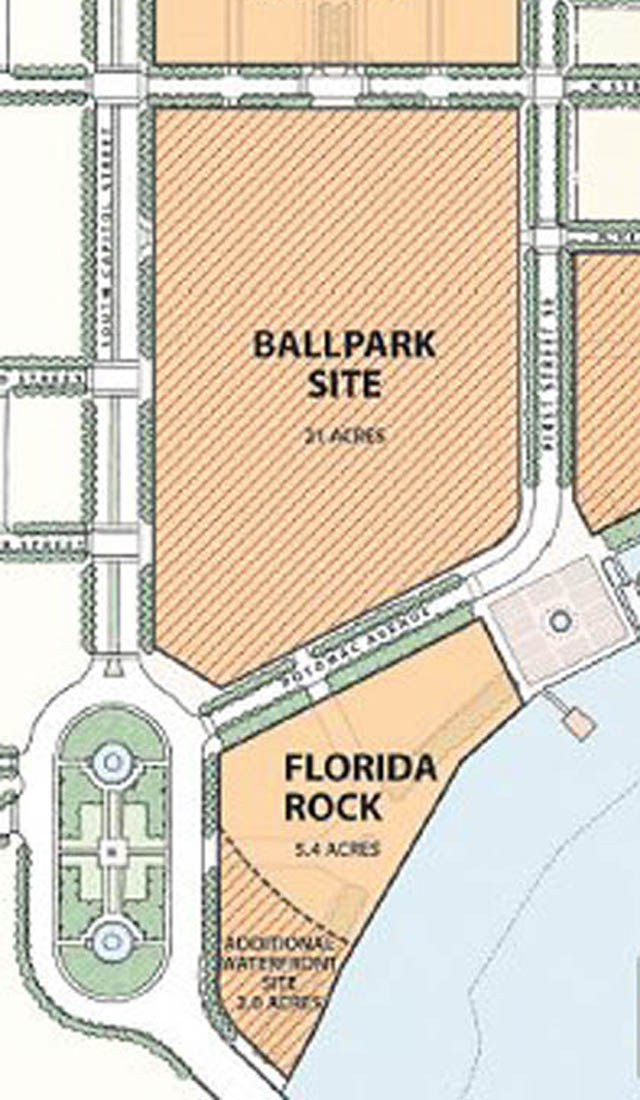
FL/WCA is handling the demolition as well as hazardous material and debris removal of a six-city-block area, bounded on the north by N Street SE, on the west by South Capitol Street, on the east by First Street SE, and on the south by Potomac Avenue SE. By the time the project is completed, FL/WCA will have dismantled and relocated a working asphalt plant and will have razed some 34 structures, including a number of low-rise industrial steel-frame buildings, a few residential properties, and auto storage yards.

“We’re excited to have thrown out the first ball for the new stadium construction,” said Terry Anderson, EVP for Wrecking Corporation of America. “Even by Washington standards, this is a landmark project, and WCA feels lucky to have the opportunity to participate. We expect the work to be completed by the end of the month.”

“The project is a significant one for the area, and we’re pleased to have taken the first steps toward construction of a permanent home for the Washington Nationals,” said Freddie Winston, President, F&L Construction.

The demolition work and debris removal was done on a fast track schedule, beginning on the southern portion of the site and moving north.

About Wrecking Corporation of America

Wrecking Corporation of America took down its first downtown DC building 30 years ago. Headquartered in Alexandria, VA, Wrecking Corp. has worked on a number of high-profile projects downtown and in the surrounding metropolitan areas, including the George Washington Hospital and the Former Washington Convention Center. Wrecking Corp. specializes in the challenges of demolition and excavation on high-profile commercial projects and cramped urban sites as well as sprawling multi-building complexes. For more information, visit the Wrecking Corp. web site at www.wreckingcorp.com or call 703.823.3850.

Download this press release as an Adobe PDF document.

Ken Wyban's Alfred Richards House, which I made two earlier posts about, is visible immediately to the southeast of the intersection of the north-south Van Street SE and the east-west N Street SE.

Maybe F&L/Wrecking Corp Joint Venture (FL/WCA), or others within the Wrecking Corporation of America (WCA), will get the contract for Nationals' Stadium’s demolition in 20 or so years.
New condominiums to intrude upon
South Capitol Frederick Douglass Mall
right of way


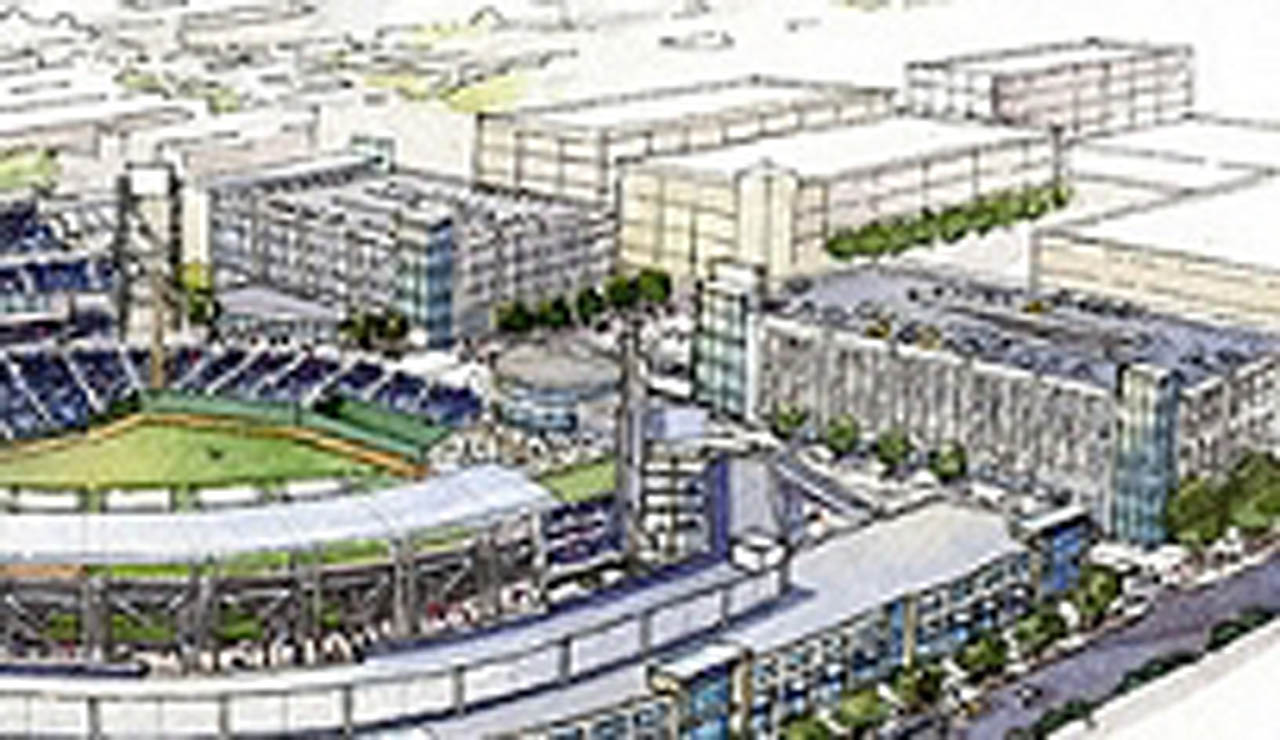
Recent developments in the design of the building along the northern edge of the Nationals Stadium with indoor parking, will add significant amounts of retail and residential space, reportedly including 600+ condominiums.

With this development extending east-west along the south side of N Street between South Capitol Street and 1st Street, its western half intrudes into the space west of Half Street SE that would be needed for the South Capitol Frederick Douglass Mall, as shown in the 1997 NCPC publication "Extending the Legacy: Planning America's Capital for the 21st Century". This would likely place 300 dwellings with a need for future eminent domain for public use.

“I strongly believe that it’s in the best long-term interest of the District to put these parking spaces underground, not above-ground as is frequently done in the suburbs,” said Mayor Williams. “It will serve the ballpark as well as the surrounding community for us to place this parking garage below ground so that we can build a productive mix of affordable housing, office, retail or residential development on top of the project. If we put the cars underground, as we do throughout most of the city, the District will reap more long-term benefits and millions of dollars in tax revenue. I want to encourage everyone involved in the undertaking to keep their eye on the big picture; we aren’t just building a stadium. We are creating a healthy cluster of development that will raise the standard of living for all our residents, reshape both sides of the Anacostia River and help make our city a livable and walkable place for the next 100 years. We should not sacrifice that vision for short-term gains.”

DC Mayor Anthony Williams; June 12, 2006

http://www.dc.gov/mayor/news/release.asp?id=918

Days after DC Mayor Williams reiterated his support for underground parking at the controversially located Nationals Stadium, a Washington DC developer Herb Miller proposed 800,000 square feet of condominiums and retail space and hotel, in a pair pf structures

Pending approval from the D.C. Council, Miller's Western Development will buy property on the north side of the stadium and build more than 900 parking spaces -- four levels above ground and several more below. Western will then build about 660 condos and 50,000 square feet of retail space as well a 180-room hotel around and above the garages.

Miller's team will pay $82 per developable square foot for the right to build on the site, says Adrian Washington, CEO of the Anacostia Waterfront Corp., which has been working on the city's behalf to reach a deal. But the final price will be determined after Western and city officials reach a deal on how much affordable housing Miller will build at the site, Washington says.

Miller declined to identify the hotel operator, but said it is a New-York based company that would be new to the Washington market.

Miller's proposal was announced June 20, just six days before the city's Zoning Commission will review the D.C. Sports and Entertainment Corp.'s application to build the $611 million stadium. Zoning laws say parking at the stadium must be built underground. But the sports commission's $21 million provides only enough money for above-ground structures, which were roundly criticized by zoning officials during a May meeting.

At the same time, the Lerner family, which is buying the Nationals, prefers above-ground parking. Stan Kasten, who is expected to become the National's president, says the owner's chief concern is that the stadium -- and the parking garages -- are built on time and on budget. The stadium is scheduled to open in 2008.

http://washington.bizjournals.com/washington/stories/2006/06/19/daily21.html

From Jacqueline Dupree’s Near Southeast DC Redevelopment:

UPDATE: Neither the Saturday WashTimes or WashPost has a story on the plan to sell the land to Western Development - but the WashTimes does have a piece on the Nats sale that includes some information on the garages: "The D.C. Sports and Entertainment Commission [...] is prepared to direct the construction team, led by Clark Construction, to build parking above ground. But the commission received some assurances from Clark this week that at least part of the parking could be built underground and completed by March 2008, the project's deadline. The Anacostia Waterfront Corp. [...] presented a plan to pay for the construction that would involve payments from developers in exchange for the rights to build on certain parcels of ballpark land. But those plans have yet to be finalized, to the frustration of the Lerner family and members of the sports commission. Talks are ongoing, and a plan could be presented to the D.C. Zoning Commission during a hearing on the entire ballpark plan June 26." Then there's this sentence, which I've not seen elsewhere and, if true, shows why they're really working so hard to find a compromise: "Any above ground parking structures would require special approval from the zoning commission."

http://www.jdland.com/dc/index.cfm#cal

June 26: DC Zoning Commission Public Hearing, Case 06-22, District of Columbia Sports and Entertainment Commission – Construction of a Major League Baseball Ballpark, request for review and approval of the new Nationals baseball stadium; Suite 220 South, 441 4th Street, NW, 6:30 pm.

From Jacqueline Dupree at
http://www.jdland.com/dc/index.cfm#cal
An Excellent Source of Information:
the "Near Southeast" DC Redevelopment
web site/blog of
Jacqueline Dupree

http://www.jdland.com/dc/index.cfm#cal


Scroll Over Map to See Details; Click for Photos, More


Information

Established January, 2003
A web site that shows what happens when someone
armed with a digital camera gets way too interested in goings-on around the neighborhood.

What's the deal with this site??? | Neighborhood Events Calendar | Contact JD

http://www.jdland.com/dc/index.cfm#cal

http://www.jdland.com/dc/mytown.pdf

Jacqueline Dupree is editor of The Washington Post newsroom intranet. Her Near Southeast DC website address is http://www.jdland.com/dc

Wednesday, June 21, 2006

South Capitol Street
Draft Environmental Impact Statement
Alternative 2
December 1, 2005

http://www.southcapitoleis.com/get_more/reports.aspx
http://www.southcapitoleis.com/pdfs/alt2_1.pdf

Reported as a footnote;
with no mention of costs


This $47-118 million interim project has gone reported as a footnote in that upon the larger $300 million SCS bridge replacement project in The Washington Post , with no mention of this interim project's $47 to 118 million cost for its temporary ramps

http://www.washingtonpost.com/wpdyn/content/article/2006/04/12/AR2006041200921.html

For Commuters, A New Way to Travel Through The District

$300 Million Span to Replace Aging Douglass Memorial

By Lyndsey Layton

Washington Post Staff Writer
Thursday, April 13, 2006; Page T03

Drive over the Frederick Douglass Memorial Bridge from Anacostia toward the U.S. Capitol and try to spot the river's edge. Look hard for the Washington Navy Yard on the right or Buzzard Point on the left, where the Potomac and Anacostia rivers swirl together.

You won't see much. Truncated by ramps, the vista consists of smokestacks, the top two floors of a U-Haul self-storage building and a Budweiser billboard.

That's why city engineers and planners are excited by plans to replace the 56-year-old Douglass bridge with an approximately $300 million new span designed to emphasize the waterfront and create a grand southern gateway to the heart of the District and up to the U.S. Capitol.

"This is an opportunity to provide an iconic structure, to bring people's attention back to the waterfront," said Kathleen Penney, deputy chief engineer of the District's Department of Transportation….

Before work begins on the new bridge, the city will improve the Douglass Bridge this summer as a stopgap measure to ensure its safety, Pourciau said. The work includes new lighting, better sidewalks and a paint job.

Workers will also replace two blocks of the elevated viaduct from O Street to Potomac Avenue with an at-grade road to improve pedestrian access along South Capitol Street. In addition, the city must construct an interchange at Suitland Parkway and Martin Luther King Jr. Avenue.

This is likewise the end note of Washington, D.C. Mayor Williams press release at

http://ddot.dc.gov/ddot/cwp/view,a,1252,q,635484,ddotNav_GID,1610.asp

Press Release for Immediate Release

Friday, March 10, 2006

Mayor Williams Unveils Possible Designs for New South Capitol Street/Frederick Douglass Bridge

(Washington, DC) Mayor Anthony A. Williams unveiled and invited public comment on four possible designs for a new South Capitol Street/Frederick Douglass Bridge over the Anacostia River. Developed by the District Department of Transportation (DDOT), the designs are for a distinctive addition to the District's skyline on the Anacostia to boost the South Capitol Gateway and help fulfill the goals of the Anacostia Waterfront Initiative (AWI). View the South Capitol Street Bridge Study website.

"DC Congress woman Eleanor Holmes Norton described her ongoing work with the House Appropriations Committee to assure the funding of the new bridge. To see the bridge concepts in 3-D animation, click here."

"South Capitol Street is one of our city's most significant gateways leading to the heart of downtown and to our Nation's democratic institutions—the Capitol, the Supreme Court and the Library of Congress—and one that many people will use as they travel to and from our new baseball stadium in Southeast," said Mayor Williams. "The South Capitol Street corridor is critical to reconnecting our city to the Anacostia River and to bringing together neighborhoods on both sides of the river."

Construction of the new bridge will start in 2011. A community meeting is planned for early April to solicit comments on the designs and update the public on the work on the corridor. The draft Environmental Impact Statement will be released this June.

Mayor Williams also thanked Representatives Eleanor Holmes Norton, Steny Hoyer and Joe Knollenberg, key congressional supporters of the new bridge. The new bridge is budgeted at $250 million, with 80 percent expected to come from federal funds and 20 percent from District money.

While the planning proceeds for the new bridge, major work will start shortly to transform the existing South Capitol Street Bridge. Starting this summer, the bridge will be rehabilitated to ensure its continued safety and use. The work includes new lighting, better sidewalks and a new coat of paint. In addition two blocks of the elevated viaduct will be removed and replaced with an at-grade roadway, greatly improving the appearance and pedestrian access along South Capitol Street.

Both reports mention the $250 or $300 million cost of the bridge project, but can not bother mentioning the $47-118 million of this interim project, which would represent a roughly 20% to 30% effective increase in the bridge project.
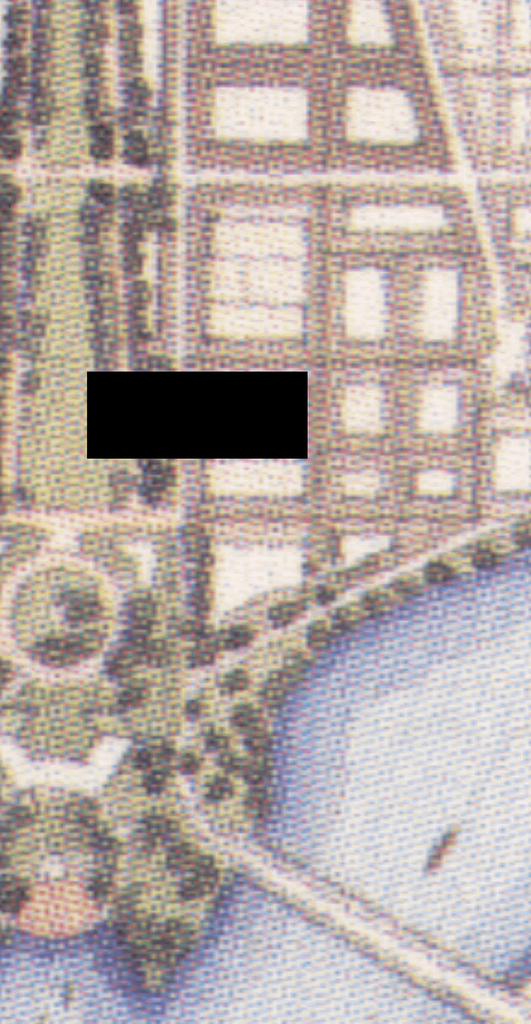
The $47-118 million interim project accomodation for the April 2008 opening: temporary ramps and shortening the existing viaduct 5 years or so before it was going to be demolished anyway

Official planning was already active on an upcoming project to replace the existing South Capitol Street Frederick Douglass Bridge, when the Nationals Stadium was publicly announced in September 2004, with the South Capitol Gateway Corridor and Anacostia Access Studies. October 2004

Parsons Brinkerhoff Quade & Douglas, Inc.Frank Lohen McCrery, Architects Justice & Sustainability Associates, L.L.C. Joseph Passonneau & Partners

http://www.ddot.dc.gov/ddot/frames.asp?doc=/ddot/lib/ddot/information/studies/anacostia/pdf/South/Draft_Cover.pdf

This October 2004 report includes a ballpark addendum.

Previously, traffic would continue to be routed on the existing bridge until the completion of the new bridge built alongside to the south that would touchdown to the surface at the intersection of South Capitol Street and Potomac Avenue, to direct traffic to Half and 1st Streets SE, allowing the existing viaduct to be then removed. Placing the stadium between South Capitol and 1st Streets, Potomac Avenue to N Street, with its location where the existing South Capitol Street Bridge land viaduct touches down to the surface at N Street, will be particularly vunerable potential traffic clot. This is especially so prior to the completion of the replacement bridge which would add connections to disperse traffic. However, the stadium’s scheduled April 2008 opening, 6 years prior to that if the replacement bridge was completed in 2014: hence creating a 6-7 year period of a stadium event traffic knot at the northern end of a stadium that would abut the viaduct.

The ballpark addendum changes this by adding an interim project that would re-route traffic via demolishing the northernmost portion of the South Capitol Street Bridge that runs along the South Capitol axis, and reconstructing its connection to the surface with new elevated ramps to 1st Street via Potomac Avenue, with two additional options for a connection to South Capitol Street touching down either just north or south of Potomac Avenue.

The estimated costs of these 3 options, the first estimated to take 3.2 years, the others 6 years, are

$47.1 to $73.6 million: Touchdown to 1st street SE only:

$56.4 to 107 million: Touchdown to 1st Street SE and South Capitol Street to the north of Potomac Avenue

$85 to 118.9 million: Touchdown to 1st Street SE and South Capital Street south of Potomac Avenue.

With these ramps to be demolished within 3 years of their completion, they would cost an upwards of $6.3 million per year (6 lanes divided by $119 million equals $19 million per lane, divided by 3 equals $6.3 million per year of use), owing to their short life span.

Funding for this interim project, would come from its inclusion within the broader South Capitol Street reconstruction, and hence, come from taxpayers.

Here’s one for Taxpayers for Common Sense: has anyone crunched the numbers for this interim project and compared them to others?

Tuesday, June 20, 2006

Letters to the Editor
A Lot Lost for Baseball
Wednesday, June 14, 2006; Page A22
http://www.washingtonpost.com/wp-dyn/content/article/2006/06/13/AR2006061301438.html
"Nats Tell D.C. It's Too Late for Underground Parking" [Metro, June 8] shows just what a bad deal for the city the baseball stadium plan was. Now, instead of having an underground parking garage, which would allow for aboveground development (restaurants, stores and, God forbid, perhaps a tree or two), the Washington Nationals' new owners insist we'll have an aboveground eyesore just so they and luxury suite owners will have a place to park their cars instead of having to take Metro like the rest of us. Sad to say, but this also reveals what poor judgment D.C. Council Chairman Linda W. Cropp and council members such as Jack Evans (D-Ward 2) showed in negotiating this deal. Not only will the taxpayers end up paying more for this stadium, we'll get an uglier, more poorly planned site as well.

BOB DARDANO
Washington
Not just the above ground parking, but the loss of our opportunity for a linear park along South Capitol Street truly adding new space to the National Mall.

Saturday, June 17, 2006

MAJOR LEAGUE BALL TEAM PULLS PRESS CREDENTIALS OF REPORTERS WHO ASKED
TOUGH QUESTIONS

From:

UNDERNEWS
JUN 17, 2006
FROM THE PROGRESSIVE REVIEW
EDITED BY SAM SMITH
Since 1964, Washington's most unofficial source
E-MAIL: mailto:news@prorev.com
LATEST HEADLINES & INDEX: http://prorev.com
UNDERNEWS: http://www.prorev.com/indexa.htm

||||||||||||||||||||||||||||||||||||||||||||||||||||||||
THE MEDIACRACY
||||||||||||||||||||||||||||||||||||||||||||||||||||||||


SOCIETY OF PROFESSIONAL JOURNALISTS- SPJ has sent a letter to Kansas
City Royals owner David Glass and Major League Baseball commissioner
Bud Selig, urging a reinstatement of media credentials to two
reporters who asked hard-hitting questions at a recent news
conference. On June 9, Bob Fescoe of WHB and Rhonda Moss of KCSP, who
work at competing sports-talk radio stations, had their credentials
revoked one day after attending a press conference in which the Royals
introduced its new general manager. Team officials offered no
specifics for pulling the credentials. However, a team representative
confirmed that the credentials have been revoked for the "foreseeable
future."

http://www.spj.org/news.asp?ref=591

SPJ Letter to Kansas City Royals and Commissioner Bud Selig Urges Reinstatement of Radio Personalities’ Credentials

For Immediate Release:
6/15/2006

Contact:
David Carlson, President, (352) 846-0171, Carlson@spj.org

Beth King, Communications Manager, (317) 927-8000, ext. 211, bking@spj.org

INDIANAPOLIS – The Society of Professional Journalists, the nation’s most broad-based journalism advocacy organization, today sent a letter to Kansas City Royals owner David Glass and Major League Baseball commissioner Bud Selig, urging a reinstatement of media credentials to two reporters who asked hard-hitting questions at a recent news conference.

On June 9, Bob Fescoe of WHB and Rhonda Moss of KCSP, who work at competing sports-talk radio stations, had their credentials revoked one day after attending a press conference in which the Royals introduced its new general manager. Team officials offered no specifics for pulling the credentials. However, a team representative confirmed that the credentials have been revoked for the “foreseeable future.”

The Society is calling upon Kansas City Royals’ management to promote and support the free flow of information by reinstating the reporters’ credentials. Additionally, SPJ is encouraging other local media to send back their credentials in protest.

“The Royals’ decision to revoke the credentials of two journalists calls into question the organization’s commitment to transparency, open access and general fairness,” said David Carlson, president of SPJ. “It smacks of an attempt to control the message and to slap the hands of those who do not play along to your specifications.

“A baseball club depends on public support for its survival, and the public depends on the news media to keep it informed. Reporters are the public’s surrogate; they attend games and press conferences to serve the public interest. Part of that interest is to ask the tough questions.”


Founded in 1909 as Sigma Delta Chi, SPJ promotes the free flow of information vital to a well-informed citizenry; works to inspire and educate the next generation of journalists; and protects First Amendment guarantees of freedom of speech and press.

-END-

And the ramps for the 1,000 space underground garage beneath
the South Capitol Commons?

The March 2005 South Capitol Street report by the US National Capital Planning
Commission is NCPC's first to show the revised planning for that corridor with the Nationals Stadium.

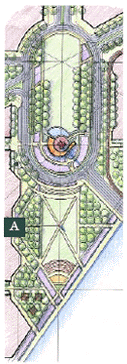
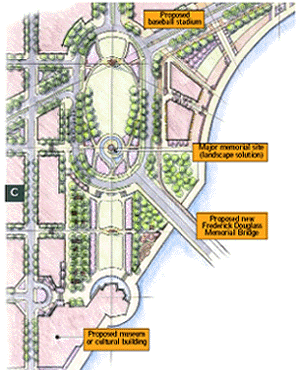
It shows a traffic oval at the intersection of South Capitol Street and Potomac Avenue. The concept of the oval, arrayed vertically, provides a park that mimics the idea of a linear greenway but confined within this oval which extends only as far north as the south side of P Street.

The space in this oval is named the South Capitol Commons, and accordingly it is to sits atop a 3,000 underground parking garage.
To improve traffic flow, the task force -- as suggested by the District Department of Transportation (DDOT) -- recommends the creation of an oval rotary where the bridge interscets with South Capitol Street and Potomac Avenue. This would create the oportunity to develop South Capitol Commons, a new seven acre green space, in the oval traffic rotary's interior.

This lively open space would be an ideal location for public gatherings, commermorative works, civic art, and landscaping. It would also serve as the stadium's front door and an intermodel transit center, featuring two levels of underground parking for up to 1,000 cars and a light rail station at grade to the east of the rotary.

The creation of South Capitol Waterfront Park is critical to protect South Capitol Street views between the U.S. Capitol and the Anacostia waterfront. Accessible from the common by a tierred staircase, the park would provide a direct connection from the common to the waterfront and create additional opportunities for recreational space, public events, and a major memorial or museums.


http://www.ncpc.gov/publications_press/s_cap/NCPC_SouthCapitolSt.pdf


This garage would need to have access points -- ramps -- with portals to handle traffic, particularly that from the replacement South Capitol Street/Frederick Douglass Bridge, which is planned to connect to this oval at the southeast.

Yet none are shown.

Thursday, June 15, 2006

DC Mayor Williams
June 12, 2006
support for underground parking

http://dc.gov/mayor/news/release.asp?id=918&mon=200606
Mayor Reaffirms His Position That Parking at New Baseball Stadium Must Not Crowd Out Development

Contact (Media Only): Vince Morris (202) 727-5011; Sharon Gang (202) 727-5011

(Washington, DC) Mayor Anthony A. Williams today repeated his position that the proposed parking garage near the new ballpark in Southeast should be underground or built in such a way that permits development around it. The mayor told reporters that building a 1,200-space parking garage underground before the ballpark’s 2008 opening is feasible, economical and aesthetically desirable. He also noted that the nine DC Council members who voted in favor of the baseball project earlier this year all endorsed setting the parking underneath development. Mayor Williams said that he has asked Steve Goldsmith, the chairman of the Anacostia Waterfront Corporation and the leader of a task force that’s working to steer the project to completion, to press for underground parking to benefit the District’s long-term interests.

“I strongly believe that it’s in the best long-term interest of the District to put these parking spaces underground, not above-ground as is frequently done in the suburbs,” said Mayor Williams. “It will serve the ballpark as well as the surrounding community for us to place this parking garage below ground so that we can build a productive mix of affordable housing, office, retail or residential development on top of the project. If we put the cars underground, as we do throughout most of the city, the District will reap more long-term benefits and millions of dollars in tax revenue. I want to encourage everyone involved in the undertaking to keep their eye on the big picture; we aren’t just building a stadium. We are creating a healthy cluster of development that will raise the standard of living for all our residents, reshape both sides of the Anacostia River and help make our city a livable and walkable place for the next 100 years. We should not sacrifice that vision for short-term gains.”

Reported at:
http://www.wjla.com/news/stories/0606/335641.html

Comments from
http://www.dcist.com/archives/2006/06/13/stand_firm_mayo_1.php

The Nats' new owner, Ted Lerner, would rather see the parking remain above-ground, both because he argues that it would be cheaper and because it would allow the stadium to be finished on time. With all due respect, Mr. Lerner, this really isn't your choice to make.

The District's political establishment all but tore itself apart debating the merits of paying for the stadium. But now that the city has promised to shell out $611 million and has undertaken the politically unpopular move of using its eminent domain powers to clear out reluctant land owners, Williams should remind Lerner who, ultimately, has the say here. And there shouldn't be much of a debate on the merits of the parking issue, either. The stadium is being built along South Capitol Street in Southeast to serve as a catalyst for development in an otherwise blighted area, and it doesn't take an urban development expert to know that above-ground parking would take away from the parks, homes, offices, restaurants, bars, and shops that will invariably take hold once the stadium is completed. Just look at RFK -- the four-decade-old stadium is surrounding by acres of parking, making for an unsightly and development-resistant plot of land.

In the end, we're paying for the stadium, not the Lerners. It is in the District's best interest to ensure that the area that they razed actually produces the development they promised. The team can move; the city can't. If the Nats ever pack their bags, it'd be nice not to be left with an empty stadium and a bunch of parking lots. Stand firm, Mayor Williams.

Posted by Martin Austermuhle in News |
I'm very much on the fence on this one. The nice thing about underground parking is that it's out of sight, and therefore gives a nicer apperance to the stadium. However, underground parking lots are enclosed and when you have a few thousand cars leaving at the same time will be smoky, and to me-- nauseating. Plus-- it'll be even more expensive to have underground parking, something that will, of course, be added to your bill.

Ground parking isn't nearly as visually appealing, but there's less immediate pollution in your face, and will allow the stadium to be open on time. Didn't the planners think of all this when they started planning out this stadium, or is this just a new development?

Considering ground was broken a month ago (or less) I wonder what the hell they were thinking?


Posted by: Gabe | June 13, 2006 12:28 PM


The Lerners have been rightly criticized in local quarters, but this steadfast position is consiscourtesy tent with MLB's approach to negotiations. Even with a massive gift of DC taxpayers (in the broadest possible sense -- so please, no tangential arguments here), MLB still wants absolutely everything on its terms alone. DC will own this stadium -- it would be worth the penalties incurred by modest delays to do it right. It's not like the Lerners are on the hook for a single cent of cost overruns. The Lerners can run parking shuttles from their fabulous concrete garage city of Tysons Corner.

They also can bite my shiney metal ass while they're at it.

Posted by: DCDawg | June 13, 2006 02:29 PM


I love how Tony has grown a set of balls this late in the game. He basically bent over for MLB without even getting the courtesy of a reach-around and now he's all chest out dealing with the Lerners. Isn't all of this something that should have been decided BEFORE the deal was signed?

A stadium surrounded by acres and acres of parking lots would SUCK! I want to be able leave the game and walk across the street to a bar.


Posted by: EAW | June 13, 2006 02:41 PM
And what about the stadium garage ramps?


While attention is focused upon the above-ground versus under-ground
issue for the stadium parking to save money, what about the ramps into these garages?


The short distance from the South Capitol Street Bridge to these garages only further necessitates lengthier
“corkscrew” ramps to line up vehicular traffic- sort of as a “buffer” to mitigate traffic backing up onto the main arteries. This need will be especially acute with the stadium complex being completed years before the replacement South Capitol/Frederick Douglas Bridge, because the existing viaduct meets the surface at N Street, right at the western garages' location.


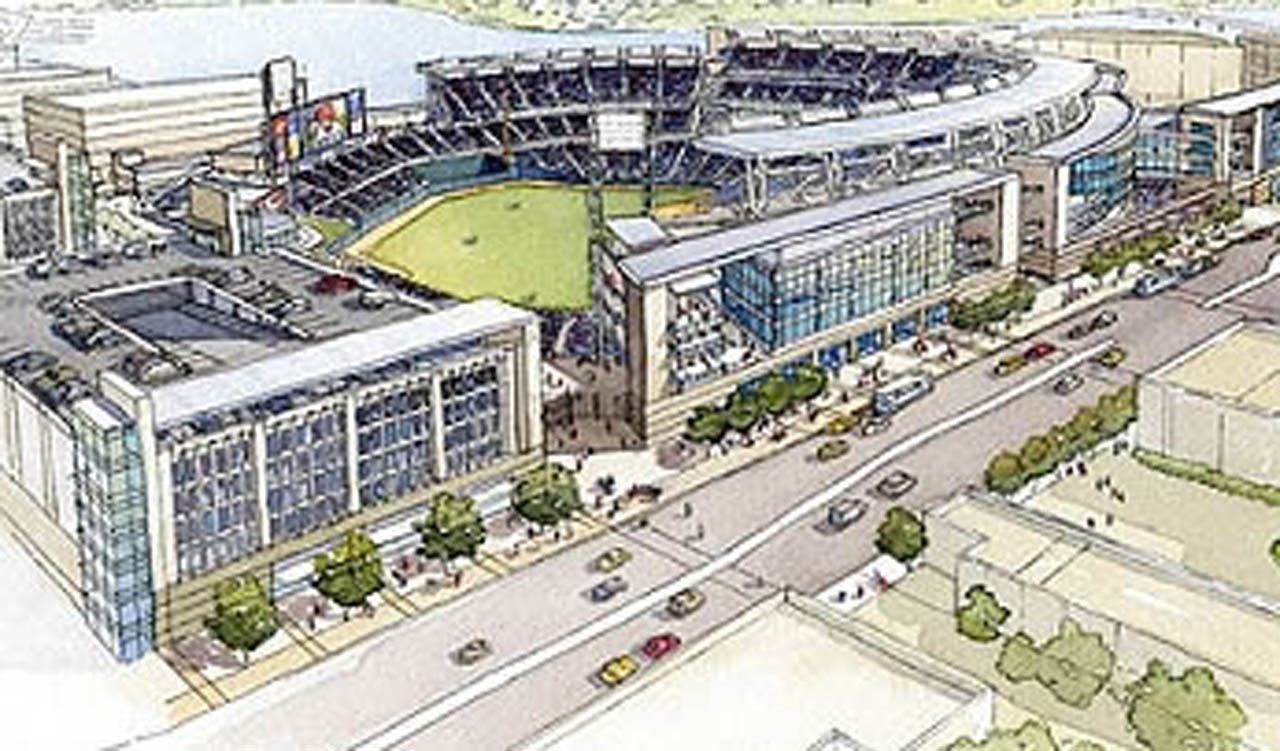
None of the stadium complex renderings show any indication of any type of corkscrew ramp.

Judging from the roof top configuration, the garages appear to lack corkscrew ramps. The designs shown appear to be like those in downtown Bethesda, Maryland, which are adequate for serving downtown retail. But what about a stadium with its concentrated event induced traffic?

By insisting upon above-ground parking, the Lerners achieve a $20 or $30 million cheaper structure. Surely, the better capacity ramps would cost more to initially construct. With the desire to reduce initial costs, and to finish the project quickly, what is the story about the Nationals Stadium garage ramps?

This is an issue that has gone un-reported and apparently un-noticed.

Do any of the official traffic studies take into account the different ramp designs? Or shall this be something downplayed or ignored in the rush of enthusiasm for bringing Major League Baseball back to Washington, D.C.?

Wednesday, June 14, 2006

Take this Stadium
And its cost cutting

The Lerner group’s insistence for all-above-ground parking, days after Major League Baseball formally approved their owning the Washington Nationals franchise for $450 million, on May 18, is only the latest of a series of cost-cutting decisions for this $700+ million stadium project that Major League Baseball insisted upon for allowing MLB's return to Washington, D.C.

Two other cost-cutting decisions are those to delete its limestone façade, announced with the public release of the stadium designs in March 2006, amidst $25 million in such cuts according to a March 16, 2006 article in The Washington Times, and to limit its “green” features, reported by WTOP in April 2006, according to the Near Southeast DC web site of Jacqueline Dupree on April 13.

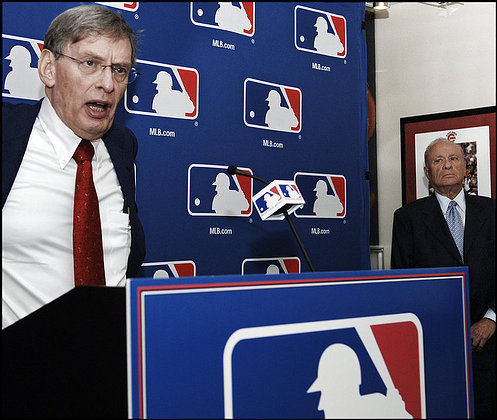
Illustration: from The Washington Post, Major League Baseball Commissioner Allan (Bud) Selig and newly announced Washington Nationals franchise owner Theodore Lerner

A look at some developments that acompany stadiums:

http://urbanplacesandspaces.blogspot.com/2006/06/our-friends-lerners-more-about.html
http://urbanplacesandspaces.blogspot.com/2006/06/it-is-rare-real-estate-developer-that.html


A look at Allan H. (Bud) Selig:

http://mlb.mlb.com/NASApp/mlb/mlb/official_info/about_mlb/executives.jsp?bio=selig_bud

A look at Theodore Lerner:

http://www.washingtonpost.com/wp-dyn/content/article/2006/05/02/AR2006050201916.html

Lerner group ownership of the Washington Nationals anounced:

http://www.washingtonpost.com/wp-dyn/content/article/2006/05/03/AR2006050301121.html