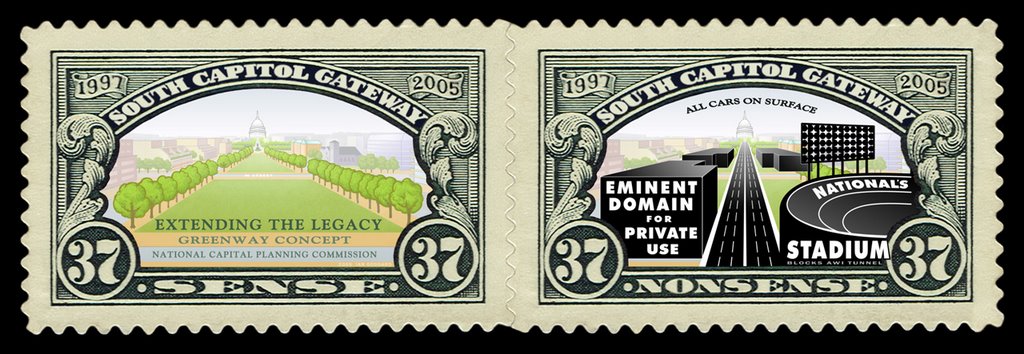
Saturday, January 10, 2009

Romish Contrasts


Catholic Church officials say razing the Rochambeau (right) would help highlight the restored Basilica of the Assumption (left).(Sun photo by Kenneth K. Lam) Jun 1, 2005
(caption and photo from Richard Layman) http://flickr.com/photos/82269993@N00/19498211/


June 2005, Looking East-Northeast

Feb 11, 2007, Looking East-Northeast

(caption and photos by Jacqueline Dupree)
http://www.jdland.com/dc/photobrowse.cfm?int=southcapitolm&toward=all

20 M Street looms to the rear of the St Vincent de Paul Roman Catholic Church in the exact position that thwarts the latter's sensible relocation for accommodating the promenade of the South Capitol Mall.

Relocated St Vincent de Paul Church
next to South Capitol Mall

Washington, D.C.'s oldest Jewish Synagogue moved several blocks in 1969 to accommodate WMATA subway construction
and placed next to I-395


NCPC 2001 "Memorials and Museums"

close up
showing church like building suggestive of the idea of a few hundred foot relocation of St Vincent de Paul Church

The South Capitol Mall this relocation would have accommodated, appeared on the cover and throughout the U.S. National Capital Planning Commission's 1997 publication of "Extending the Legacy: Planning America's Capital for the 21st Century."
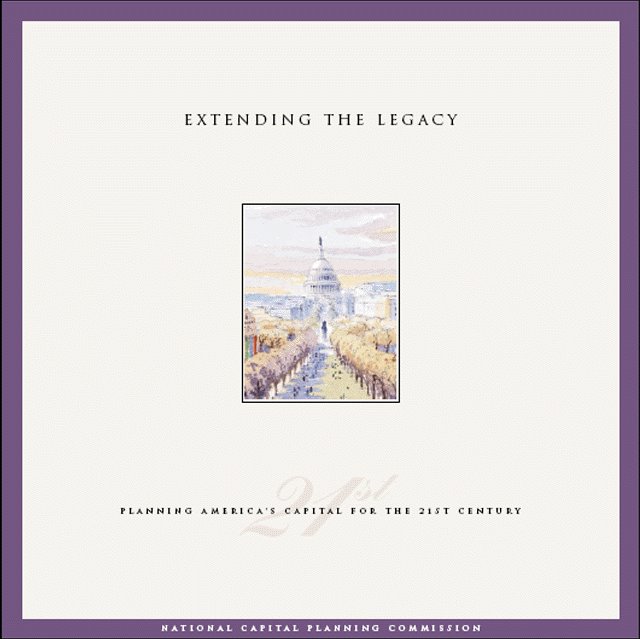
Cover: U.S. NCPC's 1997
"Extending the Legacy: Planning America's Capital for the 21st Century"
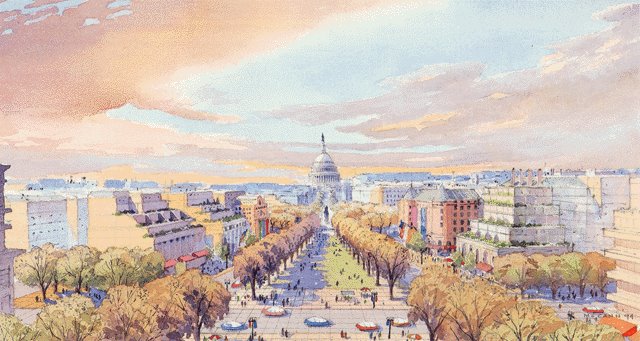


South Capitol Mall at M Street

South Capitol Mall at the Anacostia River

Alas the Roman Catholic Church is nowhere near as civic-minded.


Peter Hans Kolvenbach
Born November 30, 1928
Elected 29th Jesuit Order Superior General September 13, 1983;
Resigned January 14, 2008

http://z10.invisionfree.com/The_Unhived_Mind_II/index.php?showtopic=999

And the U.S. has a government totally subservient to Rome.


"W" Stadium


http://www.citypaper.com/bob/story.asp?id=12288

Best Demolished Landmark

The fact that the Rochambeau Apartments was knocked down reveals just how vulnerable old buildings are in the city. The 101-year-old Rochambeau, with its signature dormer-style front, was impeding the Archdiocese's plans to create a campus around the Basilica of the Assumption, which is in the midst of a $35 million renovation project. Never mind that the Rochambeau sat along Charles Street where office buildings are quickly being converted into condos, the Archdiocese wants to use the site as a prayer garden and told the city that it would cry "freedom of religion" in court if denied a demolition permit.

It's true that one person's old decrepit building is another's link to the past and people in Baltimore get surprisingly touchy when the wrecking ball swings. But it's also true that these old buildings, whether warehouses or tiny wood-frame homes, offer Baltimore an edge over other cities that have already torn down much of their old stock or missed out on the heyday of America's industrial architecture. Just check out the buildings that were spared, like the Bagby Building near Little Italy and the A-framed foundry on Aliceanna Street that now houses Pazo's. These structures serve as Baltimore's fire wall against looking like, say, Crystal City, Va., or downtown Silver Spring, places that have the ambiance of an airport mall.


A poster allegedly from the poor building's point of view.
In the window of the nearby Craig Flinner Gallery.
(caption and photos from Richard Layman)
http://www.flickr.com/photos/zombie37/276933055/in/set-72157594340759268/


The Roman Catholic Church decides to tear down the Rochambeau apartment building in Baltimore to clear the view around its Basilica of the Assumption, yet apparently, they did not object to Theodore Lerner's 20 M Street project looming behind the St Vincent DePaul Church in Washington, D.C.

Richard Layman:
Losing My Religion- Continued

Beside the [misplaced] Lump of Coal...

Physical Realities Of Lerner's 20 M Street Project

Physical Realities Of St Vincent de Paul Roman Church


Tuesday, December 16, 2008

The Useless
'National Coalition to Save the Mall'

Useless Regarding the South Capitol Mall

an early 2007 email exchange with Judy Scott Feldman
regarding the SW portion of the South Capitol Mall:

Re: UPDATE: Feb. 13 Overbeck Lecture: The Past & Future of the National Mall

Monday, January 15, 2007 4:00 PM

From:

To: "Judy S. Feldman"

Judy:

What I mean is the *western* portion of NCPC's north-south 1992-2001 South Capitol Mall proposal.

I say western because the eastern portion is to be largely covered by the Nationals Stadium. (I do not see an effort to stop that project, as much as I would like to see such an effort.) Since the serious political obstacles are to the east (the stadium and the St Vincent's catholic church), I see the advice as to "go west".

As I understand it there are projects along the west side of SCS that would block the South Mall; should not there be a South Mall even where there is no conflict with the church and the stadium.

Sincerely
Douglas Willinger


----- Original Message ----
From: Judy S. Feldman <jfeldman@savethemall.org>
To: Douglas Willinger <dougwill2001@yahoo.com>
Sent: Monday, January 15, 2007 3:52:54 PM
Subject: Re: UPDATE: Feb. 13 Overbeck Lecture: The Past & Future of the National Mall

Douglas,

We've suggested an enhanced M Street connecting S. Capitol to Washington Channel and a bridge across to East Potomac Park. M Street would become a greenway and link through SW. Is this what you mean? Other ideas are welcome.


Judy


>Judy:
>
>What about the west side of the South Capitol Mall?
>
>That is, entirely west of South Capitol Street, and not to the east.
>
>How about something on saving a swath for a greenway strictly to the west, since the buildings to the south of the Marriot are envisioned to all be demolished.
>
>Sincerely
>
>Douglas Willinger


--
Judy Scott Feldman, Ph.D.
Chairman
National Coalition to Save Our Mall
http://www.savethemall.org
http://www.nationalmall.net
301-340-3938/ 301-340-3947 (fax)
jfeldman@savethemall.org

And this one:
Re: UPDATE: Mall Has Become a Monument to Political Negligence
Wednesday, November 8, 2006 2:15 PM

From:

To: "Judy S. Feldman"
Judy:

What about the "South Capitol Commons"? (the traffic oval).

From what I understand, it is only an option.

Likewise with the town square at the corner of SC and M Street? I can't find any details on Monument Reality's Ballpark District development.

The town square appears in the Nov 2003 SCS Urban Land Institute Report and NCPC's March 2005 SCS brochure.

Doug


--- "Judy S. Feldman" <jfeldman@savethemall.org>
wrote:

> Hi Doug,
>
> Lots of things are on the table in our thinking...
>
> Judy
>
>
>
> >Dear NCSOM:
> >
> >What about the South Capitol Frederick Douglass
> Mall?
> >
> >What happened to that is a testimony to what's
> wrong
> >with our "leadership".
> >
> >Douglas Willinger
> >http://wwwfreespeechbeneathUSHS.blogspot.com
>
>
> --
> Judy Scott Feldman, Ph.D.
> Chairman
> National Coalition to Save Our Mall
> http://www.savethemall.org
> http://www.nationalmall.net
> 301-340-3938/ 301-340-3947 (fax)
> jfeldman@savethemall.org

From their organization's web site:

http://www.savethemall.org/about/index.html

About Us

Board of Directors

Chair
Judy Scott Feldman, Ph.D.
Email: jfeldman@savethemall.org

Vice Chairmen
W. Kent Cooper, FAIA
George H.F. Oberlander, AICP

Secretary
Lisa Benton-Short, Ph.D.

Treasurer
Susan G. Mulhall, C.P.A.

Directors
Charles I. Cassell, FAIA
George Idelson
Email: gidelson@verizon.net
Thomas C. Jensen, Esq.
George Peabody, Ph.D.

Director Emeritus
John R. Graves
Email: cpljohngraves@juno.com


National Coalition to Save Our Mall
P.O. Box 4709
Rockville, MD 20849

National Coalition to Save Our Mall, a 501(c)(3) citizens’ organization founded in 2000, works to protect and enhance the integrity of the National Mall. The National Coalition to Save Our Mall is an organized voice for the public as we wrestle with divided jurisdiction and is a public voice in Mall matters. Our Coalition advances its goals through public advocacy. We hold public forums and presentations to educate audiences and identify the Mall’s needs; provide testimony on Mall topics; maintain a website with relevant historical resources and current-issue information; and put out regular email updates on timely issues.

Our recent proposals for improving the Mall’s value to the nation and the city include Mall expansion—an idea that has found support in Congress, the media, and the public—to accommodate new museums and public uses [emphasis added] so the Mall can continue to evolve as a great national gathering place and vital urban park. The last time our nation prepared a comprehensive vision for the entire Mall was in 1902. Our Coalition has called for a congressionally chartered commission of prominent Americans to prepare a vision and framework plan for the Mall as a whole, updating the 1902 McMillan plan.

We welcome your participation. Please contact us for more information.

The National Mall is one of the country’s most symbolic landscapes, a major destination for visitors from the U.S. and around the world, and a major urban park for DC residents. Oversight of the Mall is divided among 6 government agencies and 8 Congressional committees.

Contact:
Judy Scott Feldman, PhD, Chair and President
301-340-3938 jfeldman@savethemall.org


http://www.savethemall.org/
'To expand, again, in its Third Century'

Judy Feldman and her organization would not actively oppose the placement of the Nationals Ballpark Stadium that blocks the South Capitol Mall's eastern portion, even though they would be most active in opposing the WW2 Memorial.


Cover: U.S. NCPC's 1997
"Extending the Legacy: Planning America's Capital for the 21st Century"


South Capitol Mall at M Street

South Capitol Mall at the Anacostia River

This lack of activity was not due to them being un-informed, as I contacted her on numerous occasions attempting to get her and her organizations on board, including at the December 2005 Christmas Party of the Committee of 100 held at the Perry Belmont Mansion- headquarters of the Masonic Order of the Eastern Star.


Judy Feldman, along with other members of this organization are also members of the highly over-rated "Committee of 100 on the Federal City" ostensibly formed to promote better planning for Washington, D.C, founded in 1924 by Frederic Delano.

Frederic Delano was brother in law (married to the sister of the wife) of Edward Burling, railroad industry attorney who co-founded the powerhouse Washington, D.C. law firm Covington & Burling, an old ally of the Committee of 100, and the entity that represented Major League Baseball in locating the Nationals BallPark Stadium blocking the South Capitol Mall.


Committee of 100 Opposed Extending the Legacy

Non Responsive Washington, D.C. "E" Groups Like Cadavers

Non Informative "E" Groups

The Un Reporting 2003+

The Un Reporting 1996+

Why Was Not The Public Informed?

South Capitol Mall Sell Out - Frederic Delano 'Family'

Nationals BallPark Stadium Committee of 100 2002 Response

Who Got Involved

SW Portion of South Capitol Mall Still Doable

Sunday, November 16, 2008

The Un Fulfilling Legacy

From: H-Net Staff <hbooks@mail.h-net.msu.edu>


Luca Molinari, Andrea Canepari, eds. The Italian Legacy in
Washington D.C.: Architecture, Design, Art, and Culture. Milan
Skira, 2007. 213 pp. Illustrations. $70.00 (cloth), ISBN
978-88-6130-304-1.

Reviewed by Mimi Godfrey
Published on H-DC (November, 2008)
Commissioned by David F. Krugler

Unfulfilling Legacy

This is a handsomely produced, thought-provoking volume, full of fascinating detail and lushly photographed--but one that will ultimately frustrate all but the most forgiving readers. Coedited by Luca Molinari, a practicing architect and professor of architecture at the University of Naples, and Andrea Canepari, First Secretary at
the Italian Embassy in Washington, it aims, in Molinaris words, to [give] recognizable form to some three centuries of American history as it has taken material form in large and small works that have shaped Washingtons physical and intellectual landscape (p.21). Arguing that Washingtons architecture illustrates the fruitful joining of Italian Classicism and American Pragmatism, the editors and contributors seek not only to document this interaction, but also to highlight the ongoing artistic and cultural relationships between Italy and the American capital (p. 21).

These ambitious goals would be difficult to achieve in any volume, but especially so here, given the parameters set by the books editors. Unlike many other American cities, Washington has never had a large population of Italian American immigrants or Italian nationals, and large numbers of Italians did not immigrate to the United States until the turn of the last century. (Full disclosure: this reviewer is half Italian-American, and has taken several Italian-language classes at Casa Italiana, one of the local cultural institutions briefly discussed in _The Italian Legacy_.) The many
contributions of Italians and Italian immigrants constitute a rich thread that brightens Washingtons history--but it is a thread, nonetheless.

The book labors mightily to prove its points, but its organization and emphases are initially difficult to ascertain. _The Italian Legacy_ alternates between wide-ranging articles (and some interviews) by Italian and American authors from a variety of
backgrounds, interspersed with photographic essays by distinguished architectural photographer Maxwell MacKenzie. Livio Sacchi and Mario Valmarana explore the weight of Palladian ideas and design on early American architecture, particularly on the designs of Thomas Jefferson; Margherita Azzi Visentini documents Italian elements in domestic buildings and gardens after the colonial period to the present. David Alan Brown and Maygene Daniels detail the Italian presence at the National Gallery of Art, covering not only John Russell Popes Classical design, but also the museums significant Renaissance holdings, largely the result of early donations by Andrew Mellon, Joseph Widener, and Samuel H. Kress. Classicist John E. Ziolkowski discusses Roman influences on the citys planning; Barbara A. Wolanin, office of the Architect of the Capitol, traces Italian design in the U.S. Capitol, especially in the
frescoes of Constantino Brumidi (180580), recently restored to eye-popping splendor. Ennio Caretto, correspondent with _Corriere della Sera_, lovingly traces the Italianness of the Washington area (p. 172), touching on such extraordinary men as Filippo Mazzei, who started an experimental farm in Virginia, wrote in support of the Revolution, and raised money for the new nations war chest; and Count Luigi Palma di Cesnola, Civil War hero, American consul to Cyrus, and an enthusiastic amateur archaeologist who became the first director of the Metropolitan Museum. (His collection of Cyprus artifacts now resides at Harvard University.) Caretto also
discusses more ordinary Italians and Italian Americans--the artists, stone cutters, and construction workers whose handiwork may be seen every day in Washingtons churches, public buildings, and Metro system. And he reminds us of the little-known, and shameful, episode of Italian internment during the Second World War, when some 600,000 Italians and Italian Americans were classified as enemy aliens, and
hundreds were interned in camps. (Caretto, echoing other estimates, believes as many as 3,300 Italian nationals and Italian Americans were interned.)

The photo essays highlight themes and topics from the articles, with beautiful layouts on Monticello and the James Barbour house in Virginia, also planned by Jefferson and now in ruins; the Italian-designed Watergate complex; the new Italian Chancery in
northwest Washington; John Russell Popes Jefferson Memorial; and Brumidis Capitol frescoes. A cluster of photo essays closes out the volume, featuring Holy Rosary Church and Casa Italiana, the center of Washingtons small Italian and Italian American communities; Villa Firenze, the Kalorama residence of the Italian
ambassador; and the equestrian statues sculpted by James Fraser, presented by Italy to the United States as a gift after the Second World War.

It is instructive to look at the offerings making up the core of the book--interviews with Giuseppe Cecchi, developer of the Watergate; Piero Sartogo, Roman architect and designer of the Italian Chancery; and Leo A. Daly, the Chancerys executive architect and engineer. An essay entitled Furnishing the Italian Chancery as a National Design Collection, by Nathalie Grenon, a designer employed by the
Roman firm Studio S.A.A., is included, illustrated with many pictures of her own creations. Thus, the books true emphasis, despite its dutiful attention to the historical, is on several of the volumes corporate sponsors (helpfully acknowledged at the front of the book, with their logos). Hence, we can understand the prominence given to Jeffersons plans for the Barbour villa, which sits on the grounds of corporate sponsor Barboursville Vineyards, while Jeffersons other important project besides Monticello, the Virginia State Capitol in Richmond, is given a single paragraph of discussion and no illustrations. Likewise, the contribution of Italian stoneworkers to
the Washington National Cathedral--the subject of an award-winning documentary and a book by Smithsonian folklorist Marjorie Hunt--is mentioned only briefly and is a curious omission. At one level, this emphasis is only practical; and after all, the designs of today will be the historical heritage of the future. But the end result is that
the editors efforts to write, in essence, the history of Italys influence in Washington feel strained and scattered.

Moreover, this lovely volume suffers on several points of design and production. One important failing is in tone. The academics writing the historical essays seem to address an audience deeply familiar with Palladian architectural theory, and indeed with the history of architecture generally. Their contributions were apparently
translated into English from the Italian (a Milanese translator is credited on the copyright page, but it is not specified which essays he worked on, or what the degree of his involvement was). As a result, these contributions, particularly Visentinis, sometimes display an awkwardness of diction or phrasing which I attribute to
their original composition in a language other than English. By comparison, the essays by Wolanin, Caretto, and Brown and Daniels are models of clarity and focus, reading much more smoothly, and supplying brief definitions of terms or events when needed.

Thorough copyediting and continuity of design were needed here as well. Punctuation veers between Italian and American English conventions, and there is much variation in the rendering of dates. Given the technical nature of the material, a glossary and
bibliography might have aided the general reader. A comprehensive list of contributors at the back of the volume would also have been useful--some contributors have no affiliation listed.

Documentation is equally scattershot: some articles use endnotes, some have lists of works cited, some have no documentation at all. Endnotes are inconsistent in citation style or are incomplete. Given the desire of some authors to document sources, the editors might have opted to eliminate all notes in favor of a list of works cited for each essay, or imposed a simple form of citation such as MLA style, with a comprehensive bibliography at the end of the book.

Problems remain in the presentation of visual information as well. Many archival images (maps, diagrams, and some photographs) have been reduced to the point of illegibility. Captions tend to be inconsistent in format and quite laconic; images are not always credited; most pictures of buildings do not identify the direction
(north, south, etc.) from which the camera was focused. The contributions of Maxwell MacKenzie (whose name is rendered throughout, incorrectly, as Max McKenzie) must be surmised when photographs are not otherwise identified. And some of those
gorgeously produced photographs are oddly repetitive: there are several similar views of the Barbour plantation and Monticello, for example, and almost identical shots of the Jefferson Memorial at night--one a full-page spread, and one laid out over two pages. Text for the photo essays is uncredited, although one photo essay, on
Monticello, reproduces text from Livio Sacchis chapter Jefferson and Co.: The Influence of the Italian Architectural Culture in Washington, D.C., and Virginia. A full-page photograph of the Roman Catholic Cathedral of Saint Matthew, attributed to Archivio Skira, is misidentified as St. Marks (pp. 174-175). Besides correcting these errors, a comprehensive list of images at the back of the volume, with credits, would have been useful; images should also have been numbered and cross-referenced with the text.

The readership for this volume remains unclear to me. Certainly, _The Italian Legacy_ will be a source of genuine pride for members of the Italian diplomatic community and for those designers and architects who were involved in the most recent projects discussed here--the new Italian Chancery, the Watergate complex. The corporate sponsors can also be well satisfied with this testimony to the warm business and cultural relationships existing between Italy and the United States.
Students of architecture and design will find much here in the interviews with Cecchi, Sartogo, and Daly and in the essays by Grenon and Paolo Scrivano (on postwar Italian industrial design) to illumine the creative process and the realities of urban planning. However, historians, cultural critics, and students of Washingtoniana will
find this volume only whets their interest. Perhaps most seriously, the general reader will be dazzled by the visual beauties of this collection, but ill-served by its content.

This work is licensed under a Creative Commons Attribution-Noncommercial-No Derivative Works 3.0 United States License.


Matthew Gilmore
H-DC
list co-editor, web editor
dc-edit@mail.h-net.msu.edu
http://www.h-net.org/~dclist/ [list website]
http://www.h-net.org/lists/subscribe.cgi?list=H-DC [subscribe to
H-DC]

Remember to check
http://h-net.msu.edu/cgi-bin/logbrowse.pl?trx=lm&list=H-DC
for past list messages.